|
|
|
|
|
|
|
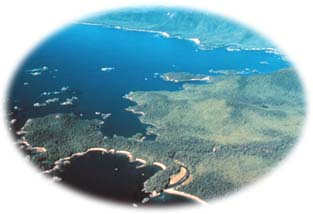
This remote wilderness park on the west coast of Vancouver Island covers 50,000 hectares (124,000 acres) of rugged coastline and old growth forest. The long coastline of Brooks Peninsula is exposed to the wild, open Pacific Ocean. The constant erosion of the sea has created the area's distinctive sandy beaches, sheltered inlets, and steep rocky cliffs, all cloaked by ancient forests.
The park's untouched old growth forests are vital for wildlife, while its pristine estuaries provide important rearing habitat for salmon. It also features breeding grounds for thousands of sea birds. The upper slopes of the rugged "refugium" mountain range, untouched by glaciers for 20,000 years, have provided a place where rare plant species can evolve and thrive.
|

On the northwest coast of Vancouver Island, north of the village of Kyuquot, Brooks Peninsula Park reaches out like a finger into the Pacific Ocean. Kyuquot can be reached by air, by charter boat from Fair Harbour, or via the M. V. Uchuck III. The Uchuck III is a converted minesweeper that makes regular trips from Gold River through the area and will provide a pick-up and drop-off service for kayakers. Float-plane pick-up and drop-off service can also be arranged with Pacific Rim Airlines. There is no road access to Brooks Peninsula.
|
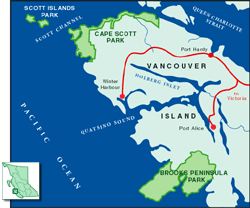
Click on the map to view an enlargement
|
" In the 1990s the public continued to rally to expand the protected areas to the lands backing the Brooks Peninsula in the Battle Bay region. This comprised the last large complex of old growth forest on northern Vancouver Island."
|

The old growth rain forests of Brooks Peninsula are primarily western hemlock, but they also include amabilis fir, western and yellow cedar, Sitka spruce, mountain hemlock, and western yew.
This coastal park contains a distinct low altitude, wet, alpine ecosystem, due to its extremely wet and windy climate. It is so harsh that many trees may only reach 10m (33ft) even after a hundred or more years of growth.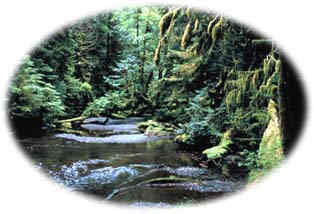
The wildlife of the area include elk, wolves, black-tailed deer, racoons, and black bears. In the waters nearby, kayakers will see Stellar's sea lions, California seal lions, harbour seals, sea otters, and occasionally gray whales and orcas.
The Klashish River estuary is an important home for Roosevelt Elk, which are found only on Vancouver Island and in the Olympic Mountains of Washington State. It is one of the last undisturbed estuaries on Vancouver Island and provides important rearing ground for a number of salmon species including chinook, sockeye, chum, coho, and pink salmon. A rare, smooth-shelled variety of native oyster is also found in the estuary.
Brooks Peninsula is home to over 120 bird species including trumpeter swans, green-backed herons, kingfishers, red-throated loons, brants, and falcons. The peninsula provides a prime birdwatching vantage point, as the peninsula extends far into the Pacific ocean where open ocean birds, normally not viewable close to land, can be seen. Bird activity in the park is at its height on Solander Island, designated as a Provincial Ecological Reserve in 1971.
Solander IslandLocated 1.5 km (1 mi) off the mainland, is a small island with steep, grassy slopes, rocky peaks, and no trees. It and the coastal waters of Brooks Bay contains important nesting and feeding grounds for large populations of seabirds. The island contains significant portions of the world's Pelagic Cormorants, Leach's Storm-Petrels, and Cassin's auklets. The island is also home to nationally significant numbers of tufted puffins, glaucous-winged gulls, and Pigeon guillemots. Bald eagles, peregrine falcons, black oystercatchers, and marbled murrelets (listed nationally as "threatened") are also found on the island.
|
"The peninsula provides a prime birdwatching vantage point, as the peninsula
extends far into the Pacific ocean where open ocean birds, normally not viewable close to land, can be seen."
|

Brooks Peninsula is a wonderful destination for ocean kayaking, boat cruising, hiking, rustic camping, wildlife and bird viewing, and photography.
Kayakers often set out to explore Brooks Peninsula from the village of Kyuquot. The Bunsby Islands in Checleset Bay, Acous Peninsula and Battle Bay, are all easily accessible from this starting point. A longer trip will take paddlers to Quatsino Sound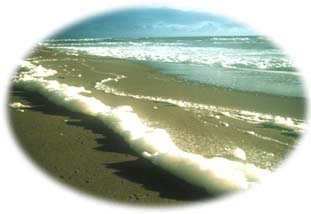 at Winter Harbour. Please note that this is open ocean kayaking with many hazards and potential weather delays. Paddlers should be experienced and self-sufficient. at Winter Harbour. Please note that this is open ocean kayaking with many hazards and potential weather delays. Paddlers should be experienced and self-sufficient.
One of the park's most popular sandy beaches is located between Orchard Point and Guilliams Bay. Good hiking and camping spots are also found on the beaches on the southeast side of Brooks Peninsula, between Jackobson Point and Quineex. These areas are often exposed to gusty southerly winds, but protected anchorages for boaters are found in Nasparti Inlet, at the Klaskisk anchorage 3 km (1.9 mi) northeast of Orchard Point, and at moorage buoys north of Jackobson Point.
Other local attractions include Johnson Lagoon near Checleset Bay which is known for its interesting reversing tidal rapids, and a warm spring located at the northeast corner of Drift Whale Bay.
|

Brooks Peninsula is the traditional territory of two native groups: the Nuu-chah-nulth (Nootka) and the Kwageulth (Kwakiutl). Twelve archaeological sites have been identified by researchers including a number of middens, a major village site, and some cave burial sites.
European history along the stormy shores of the west coast of Vancouver Island began before the days of modern navigation. At the time area was know as the "Graveyard of the Pacific". As on other parts of the coast, the sea bottom is littered with numerous shipwrecks.
The first conservation interest in the area was marked with its establishment as a Recreation Area in 1986. Brooks Peninsula was not difficult to preserve since its limited forest and mineral values combined with its extraordinary environmental values made it perfect for protection. In the 1990s the public called successfully for an expansion of the protected area to include the lands backing the Brooks Peninsula and the Battle Bay region. This new addition contained the last large unprotected complex of old growth forest on northern Vancouver Island. In 1995 the Brooks-Nasparti area was added and the park was upgraded to a Class 'A' BC Provincial Park.
Unfortunately there is still one protected area, the Klaskish/East Creeks area on the northern side of Brooks, which is scheduled for logging. Efforts continue to try to add this area to the park before it is completely logged.
|
Return to the Vancouver Island Region
Become Involved!
|
|
|
|