|
|
|
|
|
|
|
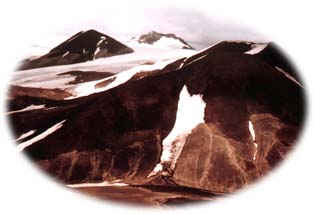
Mount Edziza Provincial Park is a stunning volcanic wilderness, unmatched anywhere in Canada. Although Mount Edziza last erupted over 4 million years ago, volcanic activity as recently as 1300 years ago has created 30 perfectly symmetrical cones in a beautiful array of colors, from browns and magentas, to bone white.
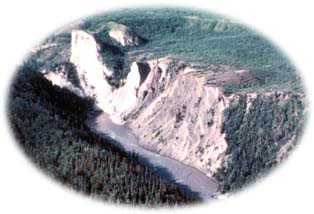
The park is bordered on the south by the Spectrum mountain range. North of the park lies the impressive Grand Canyon of the Stikine. The 300 m (1000 ft) deep, 100 km(60 mi) long canyon is an extremely scenic stretch of the Stikine River. The area's name means "cinders" in the native Tahltan language, and refers to fine pumice dust found on the Mount Edziza plateau.
|

Mount Edziza Park is located 340 km (210 mi) north of Prince Rupert, west of the Iskut River and south of the Stikine River in the Tahltan Highlands of northwestern BC. This is remote wilderness; there is no vehicle access into the park. The nearby community of Telegraph Creek is the most common starting point for both horse packers and hikers. Access to the park is also offered by float planes, which carry visitors to one of the five lakes in the park. Telegraph Creek can be reached by car by taking Highway 37 north to Dease Lake and then driving another 118 km (71 mi) southwest.
|
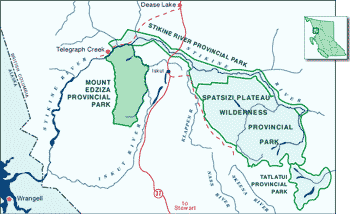
Click on the map to see the enlargement
|

Most visitors choose to fly into one of the beautiful lakes found near the park's volcanic craters. Several air operators provide point-to-point multiday hikes, in which visitors are dropped by float plane at one location and picked up a few days later at another. Overland treks provide opportunities to see black and grizzly bears, Stone sheep, Osborne caribou, moose, mountain goats, and wolves. Guides are available for spectacular hiking and horseback excursions into the park.
|
"Mount Edziza Provincial Park is a stunning volcanic wilderness, unmatched anywhere in Canada."
|

As far back as nine thousand years ago, the Tahltan Indians quarried obsidian in this region. Obsidian is a form of rapidly cooled lava, crystallized into black volcanic glass. As sharp as surgical instruments when honed, obsidian was a valuable tool making substance. Edziza obsidian was traded with other tribes from the Queen Charlottes to Alaska.
Recent human use of the area is witnessed by remnants of the Yukon Telegraph line, used during the Klondike Gold Rush. This unique wilderness area was designated a provincial park in 1972, after the BC Minister of Recreation and Conservation flew over the stunning volcanic cones and was astounded by what he saw. It was one of the very few parks created by the WAC Bennett government.
|
Return to the Cassiar Region
Become Involved!
|
|
|