|
|
|
|
|
For many people, wilderness is a playground, a place of refuge, an opportunity to get away from it all and to restore their spirit. But BC's parks are also much more than this.
They are world preserves for nature.
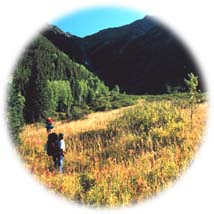 The importance of world preserves has been emphasized by the science of Conservation Biology. This science stresses the importance of conserving large core protected areas, surrounding them with buffer zones, and linking them with wildlife corridors. The importance of world preserves has been emphasized by the science of Conservation Biology. This science stresses the importance of conserving large core protected areas, surrounding them with buffer zones, and linking them with wildlife corridors.
In this way protected areas can be created that will provide enough range for wildlife to feed, migrate, and reproduce, helping to ensure the survival of not just endangered species but entire ecosystems.
BC is a province of amazing diversity and over the past decade, the BC government has been expanding BC's park system to include representation from all ecosystems throughout the province. Over 70% of the bird and mammal species found in Canada make BC their home, and approximately half of those species are located only in BC. Thus BC's park system is critical to the survival of this enormous diversity of species.
|
Great Wild Spaces
BC Spaces for Nature believes that given the limited time left to preserve wilderness, and the scarce resources available to do so, greater emphasis must be placed on retaining very large protected areas, or complexes of protected 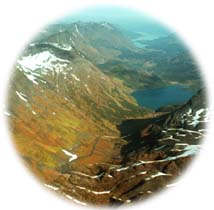 areas (measuring in the millions of acres) which have the capability to ensure the long term survival of ecosystems. Given their vast size, these 'Great Wild Spaces' are of global conservation significance, and will serve over the long term as premier sanctuaries for the preservation of nature, biodiversity, wildlife and wilderness on earth. Elsewhere in the world Great Wild Spaces such as Africa's Serengeti, the U.S. National Parks of the Colorado Plateau, and Australia's Great Barrier Reef represent the highest level of nature and biodiversity preservation. They are the foremost archives of life, modern day Arks. Once protected, they become world preserves for Nature, now and for all generations to come. areas (measuring in the millions of acres) which have the capability to ensure the long term survival of ecosystems. Given their vast size, these 'Great Wild Spaces' are of global conservation significance, and will serve over the long term as premier sanctuaries for the preservation of nature, biodiversity, wildlife and wilderness on earth. Elsewhere in the world Great Wild Spaces such as Africa's Serengeti, the U.S. National Parks of the Colorado Plateau, and Australia's Great Barrier Reef represent the highest level of nature and biodiversity preservation. They are the foremost archives of life, modern day Arks. Once protected, they become world preserves for Nature, now and for all generations to come.
Some of the last great wilderness areas in North America are within BC's borders. Thus BC has a chance to contribute to the global Great Spaces. Not only does protecting BC's Great Spaces benefit plants and animals, but it also offers future generations a chance to experience vast wilderness - something that is fast becoming rare on this planet.
|
|
The Great Spaces concept was conceived and implemented in BC during the Tatshenshini campaign, which successfully completed the world's largest international protected area. Preservation of BC's Tatshenshini region linked the adjoining national parks of Kluane (in the Yukon), and Wrangell-St. Elias and Glacier Bay in Alaska. 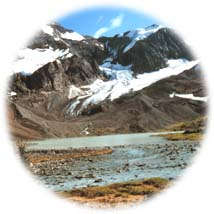 By creating the largest international parkland on earth, enough area was preserved to allow the region's resident species, including large predators and their prey, to continue to live and thrive as they always have. Since Tatshenshini, this approach has been emulated several times, including the Yellowstone to Yukon (Y2Y) campaign. The goal of this broad-scale campaign is to conserve a large swath of wildlands along the Canadian and US Rocky Mountains, running from Yellowstone Park in the U.S., through BC, and into the Yukon. By creating the largest international parkland on earth, enough area was preserved to allow the region's resident species, including large predators and their prey, to continue to live and thrive as they always have. Since Tatshenshini, this approach has been emulated several times, including the Yellowstone to Yukon (Y2Y) campaign. The goal of this broad-scale campaign is to conserve a large swath of wildlands along the Canadian and US Rocky Mountains, running from Yellowstone Park in the U.S., through BC, and into the Yukon.
Although the province's remaining unprotected wildlands are under imminentthreat, BC still has extensive areas of high calibre wilderness, offering the province the chance to preserve further areas of globally significant Great Spaces, and to pass them on to future generations.
A rapid rate of development has so diminished British Columbia's natural inheritance that those who wish to preserve wilderness are now in a race against time to save sustainable samples of biodiversity. With the arrival of the new millennium, the time remaining to complete the BC preservation system is very short, likely three years in the south and five years in the north. Thus it is critical to quickly protect as much wilderness as possible.
|
The Public's Contribution
BC Spaces for Nature and many other conservation organizations in British Columbia have worked hard to protect key wilderness areas in this province.
But they do not work alone. Many campaigns depend on contributions made by the public. It is the combined actions of thousands of individuals that has often made the greatest difference. It was their voices that were heard, and their support that has resulted in both protected areas for wildlife, and recreational opportunities for future generations.
In 1993, after extensive public consultation, the BC government produced the British Columbia Protected Areas Strategy.
|
WHAT CAN YOU DO?
 Learn about how you can help defend BC's great spaces. Learn about how you can help defend BC's great spaces.
Learn about Solutions. The Jobs and Environment Action Plan shows you how to achieve both a healthy environment and a strong economy.
Visit BC Spaces for Nature, and find out more about how you can be a part of the solution.
|
|
|
|